Revertir exodous cheese solo en una rama

14 replies · 52 views

3xt3nd3d

#1

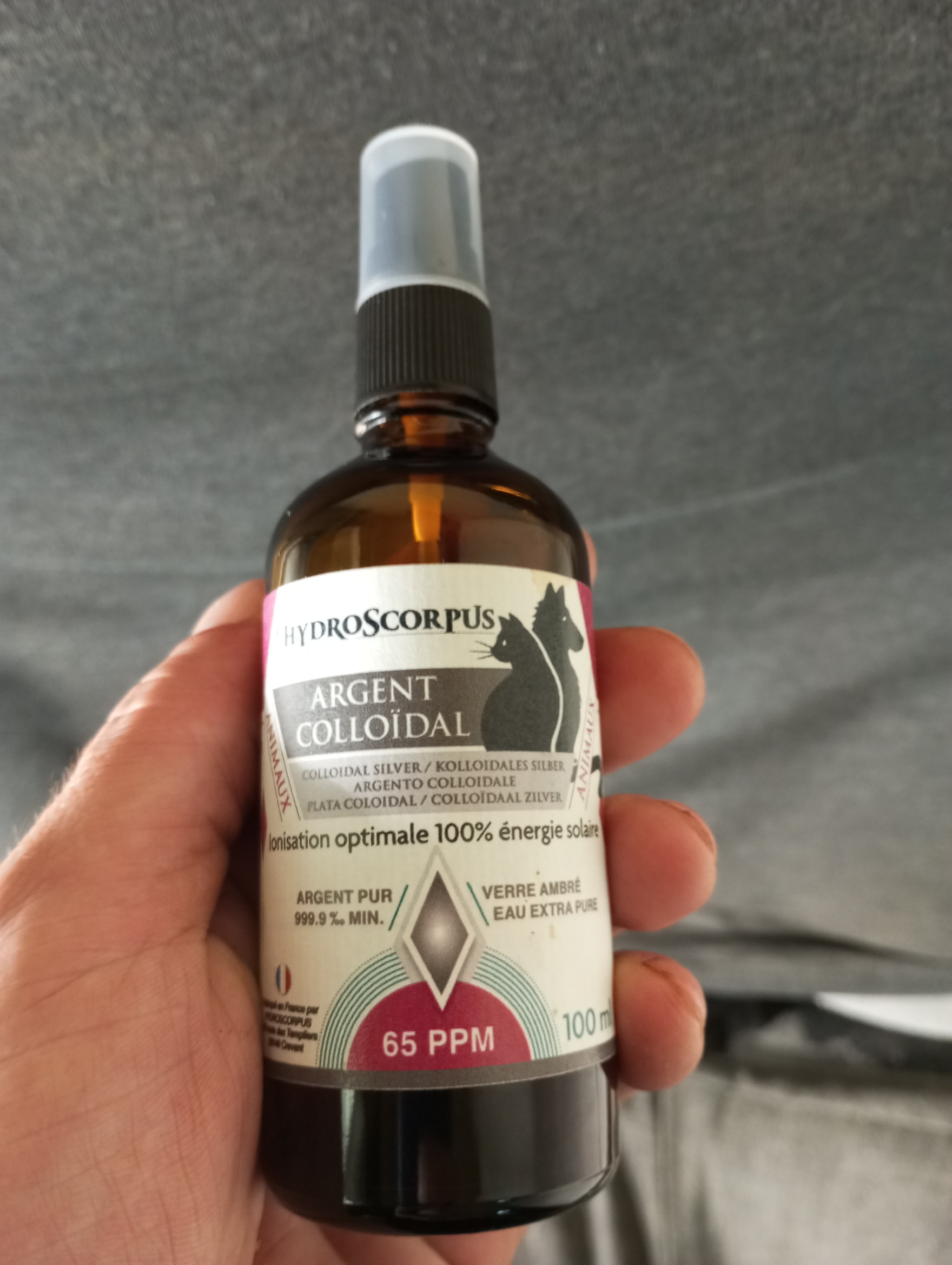
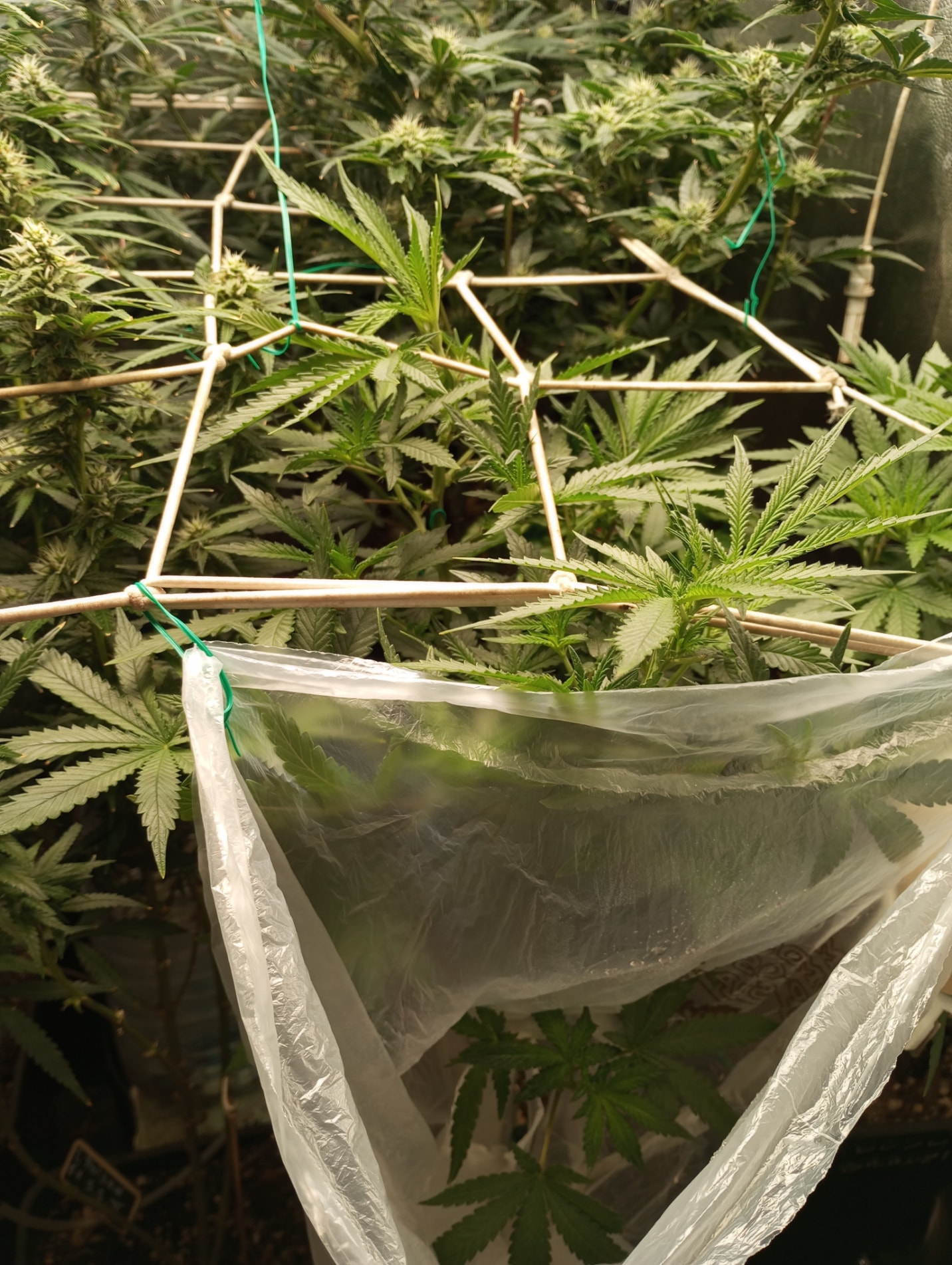
Hi, I’m trying to reverse a single branch of Cheese with colloidal silver, I’m not trying to reverse the whole plant, just one branch. I’ve been applying it for about 1 week before lights on, I don’t know if I’m doing it right or if you have any advice for me, I just want a few seeds. The idea is to reverse just one branch and use that Cheese pollen to pollinate only a few branches of the same plant, I could use some advice


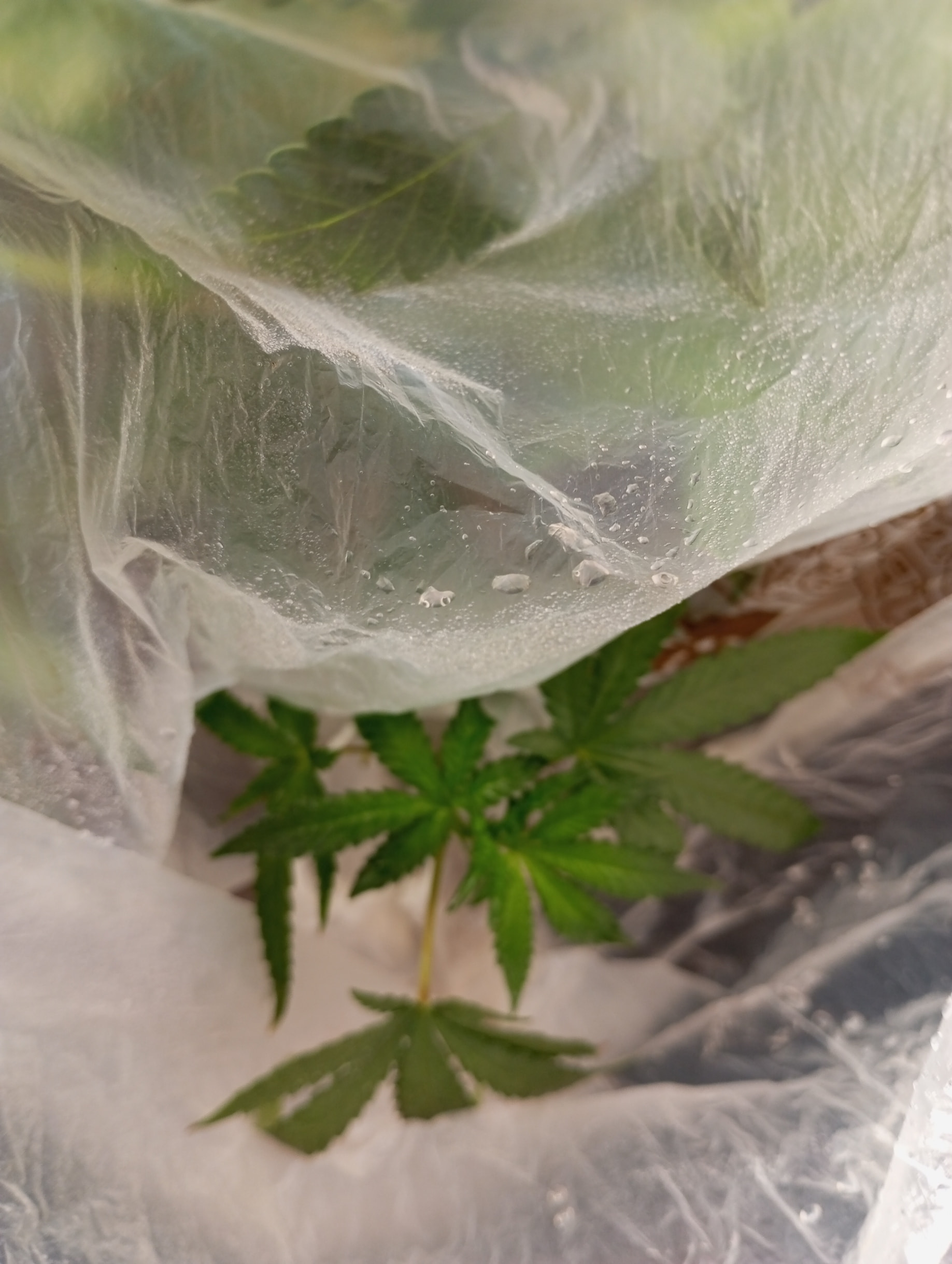
I only put the bag on when it’s time to spray the colloidal silver so it doesn’t touch other branches or drip, I usually leave it for about 15 minutes and then remove it

Reply ↗
herr_gruen

#3

I hold a newspaper between the shoot I am spraying and the rest of the plant

Reply ↗
Pflanzenpaul

#4

What I can say about this!
That plants treated with colloidal silver are no longer suitable for consumption.
Because it goes into the whole plant.
However, it only produces pollen sacs at the treated spot, which is enough for it to self-pollinate.
After the seed harvest, the rest of the plant must be disposed of in the trash and not through the lungs. :rofl:
There are videos about this on YouTube and you can also look into it online.
Always think about your health as well.
But have fun experimenting.

Reply ↗
3xt3nd3d

#5

well, now you’ve left me with doubts, I had already looked it up and it clearly said that you should only discard the areas where it is applied, because it doesn’t move through the plant, I just looked it up after reading your post and it says the same, I quote.
It is not necessary to discard the entire plant, but under no circumstances should you consume the parts that have been in contact with colloidal silver. Colloidal silver is a local systemic compound: it travels through the tissues of the treated branch, but does not usually distribute in dangerous concentrations to the rest of the healthy branches.

If you applied the treatment correctly (for example, to reverse the sex of a branch and obtain feminized seeds), you must follow these strict safety guidelines:

Which parts to discard and which to keep

  • Discard the treated branch: Once you get the pollen from that specific branch, cut it carefully and throw it in the trash. Do not smoke, vape, cook, or extract resin from the buds on that branch. Silver is a heavy metal that is not eliminated by drying or curing the plant, and burning or ingesting it is highly toxic to your health.
  • Keep the rest of the plant: The branches that were kept away from the spray and only received pollen to produce seeds are safe. You can harvest those seeds without any problem.

have you read that somewhere? I mean, to cross-check information?

Reply ↗
3xt3nd3d

#6

Insisting to the AI, it keeps repeating the same thing.
So colloidal silver doesn’t travel throughout the whole plant?

Correct, colloidal silver does not travel throughout the entire plant. Its effect is strictly localized to the tissues that come into direct contact with the liquid. [1]

Unlike other aggressive systemic chemical compounds, colloidal silver works as follows:

  1. Local effect by absorption: When you spray colloidal silver on a single branch, the silver ions penetrate only the cells and vascular tissue of that area. Its main function is to block the production of ethylene (the hormone responsible for the plant developing female flowers) right at that point. [1, 2, 3]
  2. No general translocation: The plant does not redistribute silver through the phloem or xylem to upper, lower, or opposite branches. For this reason, only the branch you wet with the spray will change sex and form pollen sacs, while the rest of the plant will continue developing female flowers as normal. [1]
  3. Danger from “drift” (accidental contact): The only reason the rest of the plant could become contaminated is not internally, but because the spray “drifts” through the air during application and accidentally splashes neighboring buds.
Reply ↗
Pflanzenpaul

#7

@3xt3nd3d
This is what I found in the AI and it confirms what I wrote.
I had already seen YouTube videos before where what the AI says was also said there.
So I have confirmed from 2 sources what I wrote about it here.

Yes, colloidal silver travels through the plant.

Silver ions are taken up via the vascular system (xylem) of the cannabis plant and distribute systemically throughout the tissue.

Can you still smoke the rest of the unpollinated flowers?

No, under no circumstances. Even if only a single branch was sprayed, silver particles deposit throughout the entire plant—including the untreated branches and flowers.

The risks of smoking silver-contaminated flowers:

  • Inhalation of heavy metals: When burning or vaporizing plant material with silver residues, nanoparticles enter the bloodstream directly through the lungs.
  • Toxicity: Silver accumulates in tissues and organs and can cause chronic poisoning symptoms (such as argyria) or respiratory irritation.

Safe procedure for seed breeding

  1. Completely dispose of the treated plant: The plant treated with colloidal silver serves exclusively for pollen collection. After collecting the pollen, the entire plant should end up in the trash.
  2. Targeted pollen transfer: Carefully collect the pollen with a brush or cotton swab and selectively pollinate a branch of another, completely untreated female plant.
  3. Isolate the mother plant: Treat the silver plant in a separate room to avoid accidental spraying or pollination of other plants in the grow room.

I only mean well, because once you get sick from harmful smoke, it’s often irreversible.
For pollen collection to pollinate other plants, it is safe and completely OK.
But not smoking unpollinated parts of this treated plant.
I only recently stumbled upon this topic and therefore knew this version.
I just don’t understand why there are such different statements in the AI.
Maybe it also depends on how you start the question.
I unfortunately can’t say.
My source for this was Gemini and before that YouTube.
Cheers

Does even a single branch with colloidal silver make the rest of the plant unusable?

That’s exactly what I asked the AI again

The answer confirmed again :backhand_index_pointing_down:

Yes, definitely. Even if you only spray a single branch, the remaining part of the plant becomes unusable for consumption.

Here are the reasons why partial treatment still completely contaminates the plant:

1. Systemic distribution via the vascular system

Plants have a transport system (the vascular tissues xylem and phloem). Through these pathways, liquid substances and dissolved ions from the leaves and stems are not just kept locally, but distributed throughout the entire organism. The silver thus inevitably travels into the unsprayed branches and flower heads as well.

Standard practice in breeding

Professional and experienced breeders treat a plant with colloidal silver (or STS) exclusively as a pollen donor.

  • The process: The treated plant produces female pollen (feminized). This pollen is harvested. Once the pollen is collected, the entire plant is disposed of.
Reply ↗
herr_gruen

#8

I do that all the time too and dispose of the whole plant. AI is a tricky thing, not everything is always accurate. Usually, posts from others are just quoted or summarized without checking them for truth. Though that’s usually stated with AI info. I’ve often heard that the plant is contaminated and that you shouldn’t even smoke it.

With the amount of seeds you’re going to harvest, it doesn’t hurt to dispose of the plant. Your health is worth more.

Regards

Reply ↗
Pflanzenpaul

#9

@herr_gruen
Exactly, I also think that the AI “artificial intelligence” just cobbles something together from many opinions.
Just as I said, in the end I only got confirmation of what I had already picked up in videos on other platforms.
And I read his text as him doing that with the C. Silver.
But then a part of the plant for consumption.

Or that others then think that it’s harmless.
You have to clearly say that there are or can be health concerns.
Otherwise, just securing feminized seeds for yourself.
That is completely OK.
And exactly.
After that you have so many seeds that you can easily do without the rest of the plant. :rofl:
Friends!
Better safe than sorry, health comes first!
And still, have fun growing.

Reply ↗
3xt3nd3d

#10

Sorry for taking so long to reply, these days have been a bit complicated.
I’m sure you mean well, sorry if at any point it seemed like I took it the wrong way, or took too long to reply, it has nothing to do with me not appreciating the information.
As for the harmful smoke, well… there is no good smoke that enters the lungs lol but yeah, they are heavy metals and they are very toxic.
As for the AI responses, well… they are tools, I am fully aware of what it is, a tool that helps you, of course it helps a lot, it doesn’t always give correct answers, but if you understand that it works by reading on “the web” you understand why it makes mistakes and you see it as “normal”.
As far as I understand, could the problem be a translation issue?
I use “colloidal silver” and not “silver thiosulfate”
According to Google’s AI, colloidal silver is not systemic and does not travel through the plant, but silver thiosulfate DOES.
The AI insists that it is local and not systemic and does not “travel” through the plant

Reply ↗
3xt3nd3d

#11

Just to clarify, I can throw away the whole plant, and I’ll probably do so if this isn’t cleared up perfectly. As you already know or will see in photos, behind that same plant I have quite a few more, it’s just that it would be interesting to clarify it somehow.

Reply ↗
3xt3nd3d

#12

Today, the AI says that it is indeed toxic xD so I have to admit you’re right and clarify that YOU CANNOT SMOKE the treated plant.
a shame, I just read in the same response that there is a natural method using hormones (gibberellins) which curiously I have, but that will be for the future, I think it must be done at the beginning of flowering, thank you very much friend

Reply ↗
herr_gruen

#13

I have also experimented with gibberellic acid, but the result was not quite as good as with colloidal silver. It is also applied about two weeks before flowering.

My conclusion is that only colloidal silver is an option for me, the effect is fantastic. Gibberellic acid and rodelization also exist, but in the long run they are too expensive for me. I can make colloidal silver myself, I have to buy gibberellic acid, and rodelization takes too long for me. With rodelization, pollination only starts after the normal flowering period, and not every plant has the desire to reproduce immaculately to preserve its species. In addition, the seeds also still have to mature, which roughly doubles the flowering time.

Regards

Reply ↗
Pflanzenpaul

#14

Greetings.
No, I’m not angry or frustrated when someone doubts what I say.
Didn’t want to spoil anything for you either.
Clearly, the smoke itself isn’t exactly healthy in the long run.
But what weighs heavier is everything that can be inside it, and that’s what really wrecks your health.
That only becomes noticeable after years.
It’s really just about not smoking such a treated plant and its remains.
Producing seeds is OK.
This warning doesn’t just protect you, but also many others once you have such knowledge.
I’m glad that you eventually came across confirmation of my version after all, making it easier for you to view the whole thing more critically.
Stay healthy and keep having fun growing and experimenting.
Best regards

Reply ↗
3xt3nd3d

#15

Good to know, I’ll follow the same method with the Exodus, since it’s already contaminated, I don’t want to try gibberellins because they will stretch a lot and won’t be smokable either, maybe I’ll try with the method you mention leaving a few flowers to see what happens, the least productive ones or how should it be done? I wouldn’t mind getting some seeds from the Tropicanna Fast since both turned out really good

Reply ↗

Reply