 #8
#8Das Verfahren das ich beschreibe wurde in Holland entwickelt , so produzieren die Breeder unsere feminisierten Samen
86 respuestas · 862 visitas
#8Das Verfahren das ich beschreibe wurde in Holland entwickelt , so produzieren die Breeder unsere feminisierten Samen
#9Wir nehmen uns jetzt unsere Gibberellin Säure
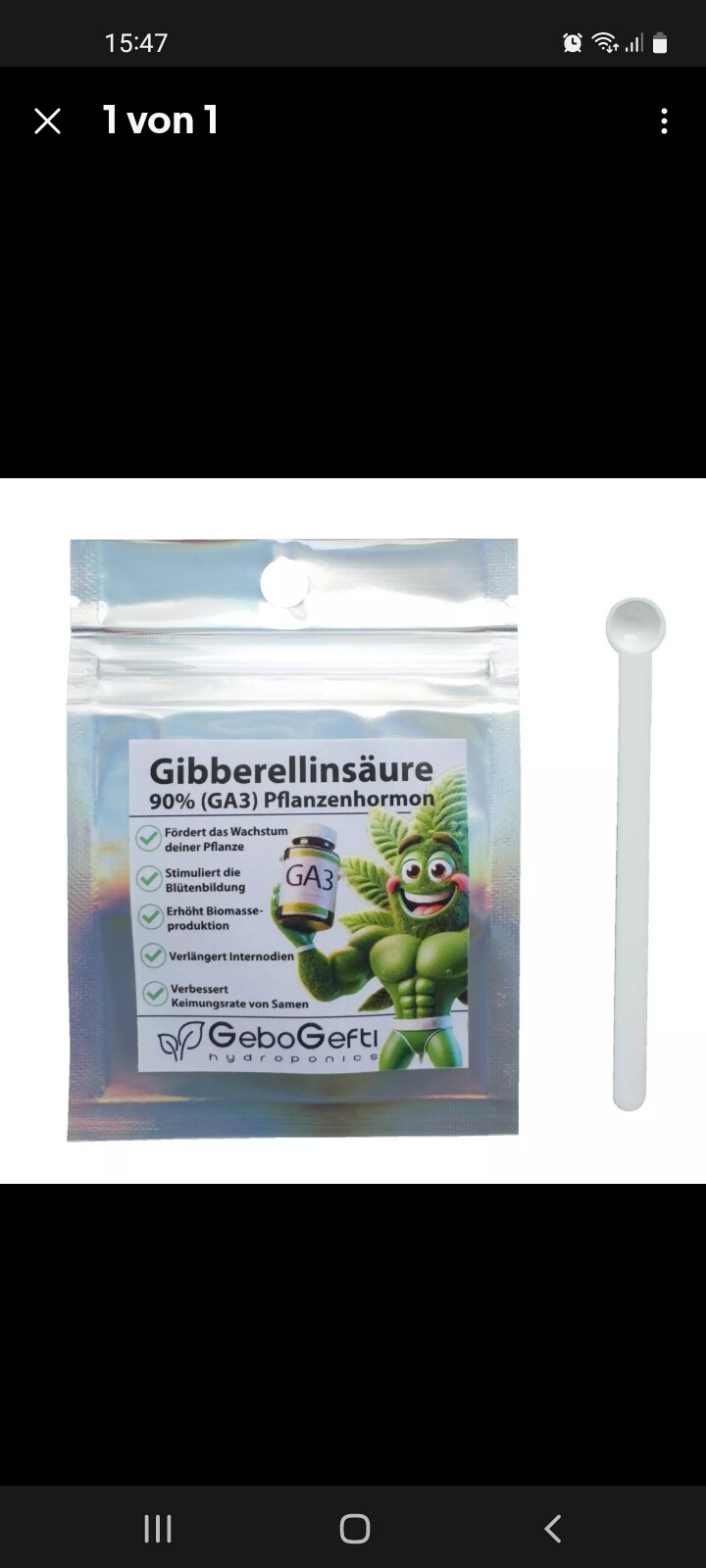
 #10
#10Es versteht sich von selbst das wir unser Experiment nicht mit unseren anderen Damen vergesellschaften sollten da wir diese nicht besteuben wollen.
Zum bestäuben benutzen wir am besten einen sauberen weichen Haarpinsel. Diesen machen wir am besten an den weiblichen Pistillen etwas klebrig bevor wir den männlichen Pollen aufnehmen. So können wir nun gezielt die weiblichen Blüten bestäuben.
#11Werde noch nach Videomaterial suchen
#12Hier ein Link zu einem Video in dem man das ganze gut sehen kann ( leider auf englisch )
 #13
#13MöglichkeitNr.2 Sibernitrat
Dazu benötigen wir folgendes:
Los geht’s
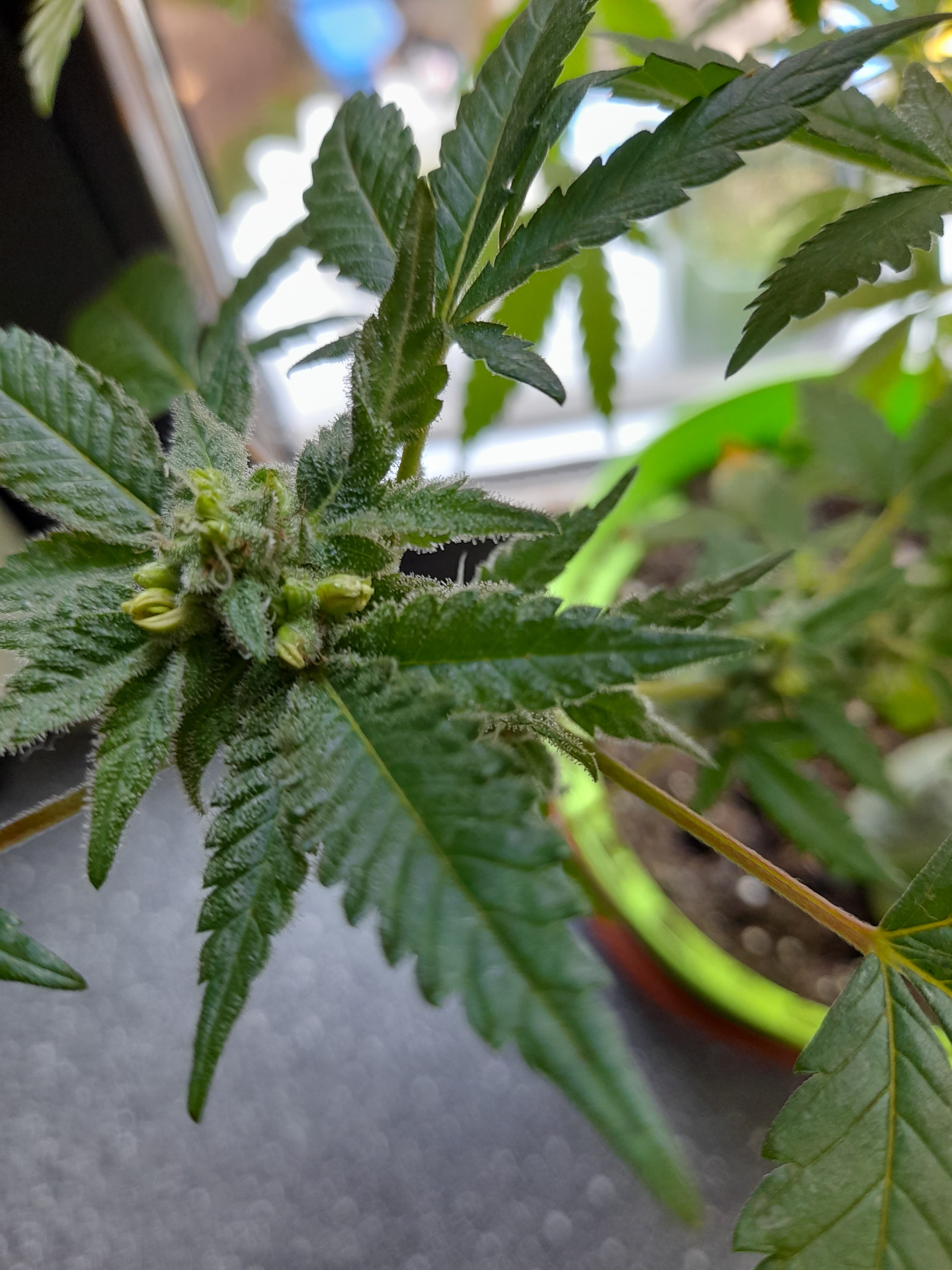
Wir mischen 0,1 Gramm Silbernitrat mit 0,5 l destiliertem Wasser und besprühen damit unseren markierten Trieb von unserer Patientin und schicken sie in die Blüte.
Die Blätter werden sich die erste Zeit etwas hängen lassen dann erholen sie sich wieder. Unser Trieb wird dann männliche Blüten ausbilden, jedoch hat der Pollen nur weibliche X Chromosome wodurch nach der Bestäubung garantiert weibliche Samen entstehen.
Auch bei dieser Methode wird bei unserer Patientin wieder eine chemische Vergiftung zugefügt weshalb sie weder zum rauchen noch zum Verzehr geeignet ist
#14Habe hier noch ein Video gefunden in dem sich einer die Silberlösung selber herstellt. Ist ganz gut erklärt finde ich. Diesmal auf deutsch.
 #15
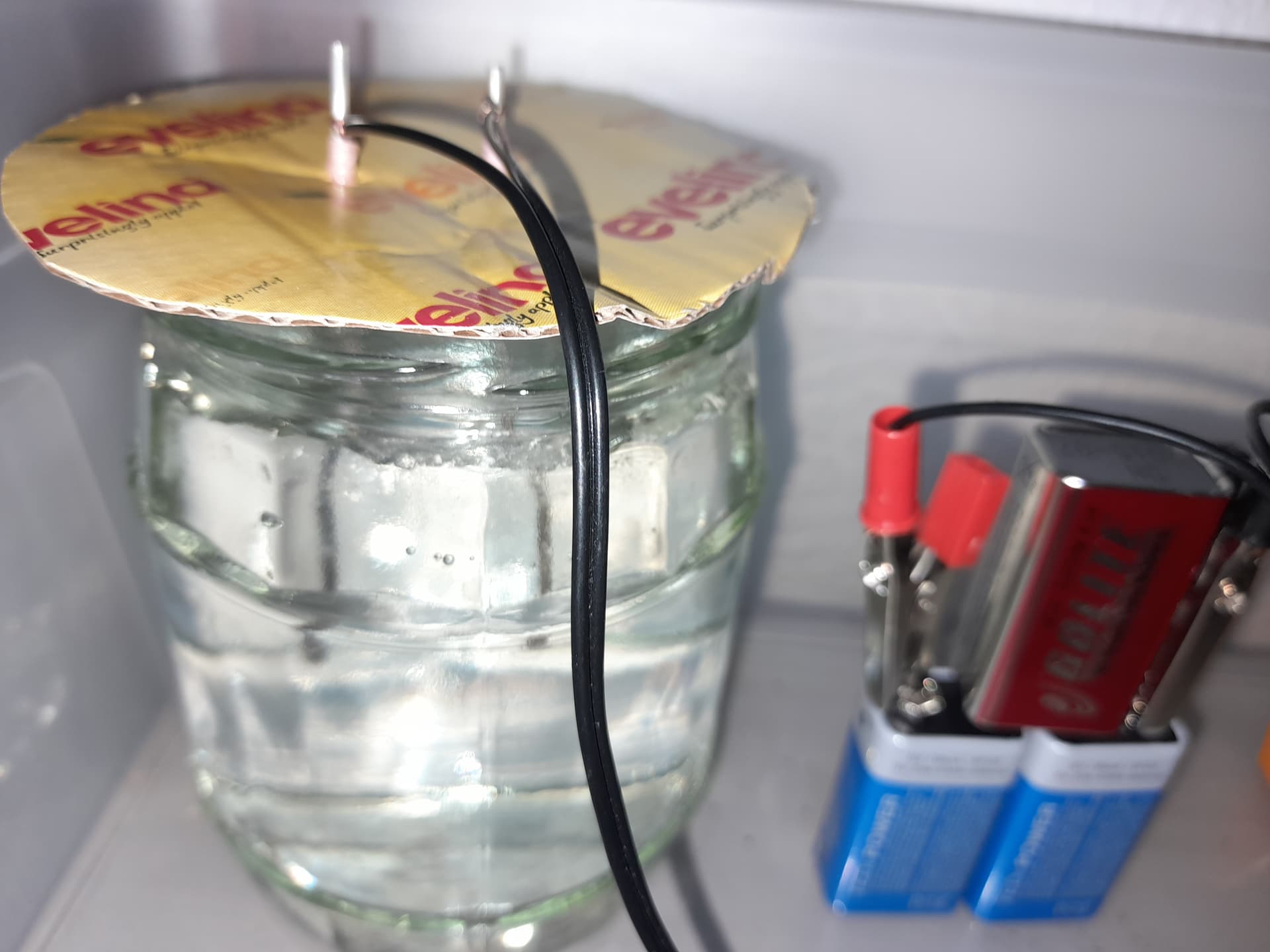
#15Habe mal einen Versuch mit Kollodialem Silberwasser gestartet
 #16
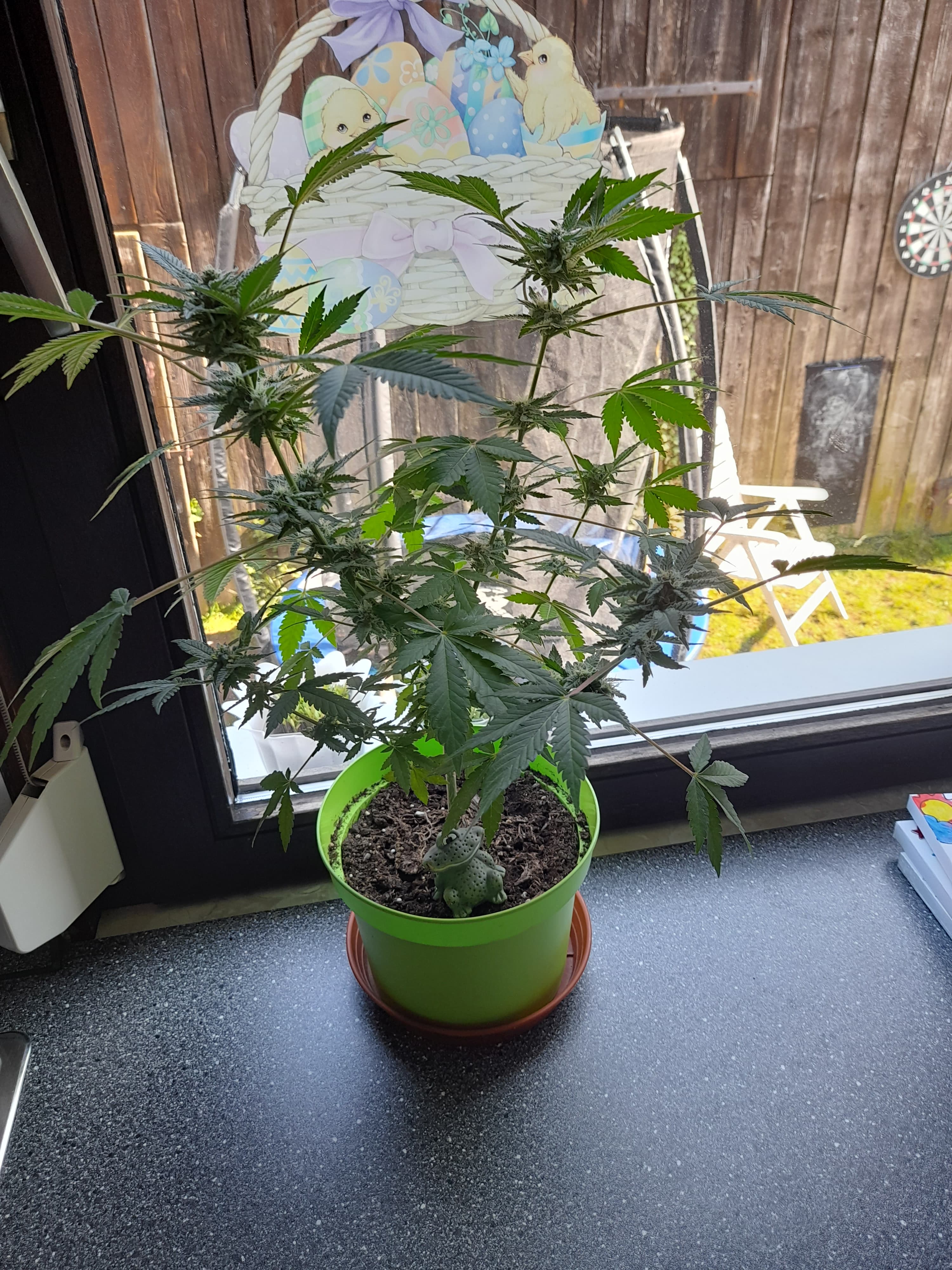
#16Mein lieber @herr_gruen 
 ,
,
Zum einen, erstmal Hut ab  für deinen Mut einfach mal sowas zu machen. Das trigger ja wahnsinnig den “Dr. Weedenstein” in mir.
… Elektrizität… Gefährliche Chemische verbindung… Pflanzen… “it’s Allive!!!” 
Ich bin echt so gespannt ob es auch bis zum Schluß klappt. Ich drück dir auf jeden Fall alle  .
.
Ich folge dem Thema jetzt mal genauer.
Grow on 


#17
The stigmas have fallen off and the ovaries are swelling. I will wait another 3 weeks and then carefully open a node to see how far the seeds have matured. I don’t want to harvest too early and thus ruin everything. It continues to receive fertilizer according to schedule and sun. After 10 hours of freedom, the lady goes back into her box in dark confinement.
#18Today I removed the two male shoots. Since a seed needs about 4 weeks to ripen and it’s nearing the end, they are no longer needed.
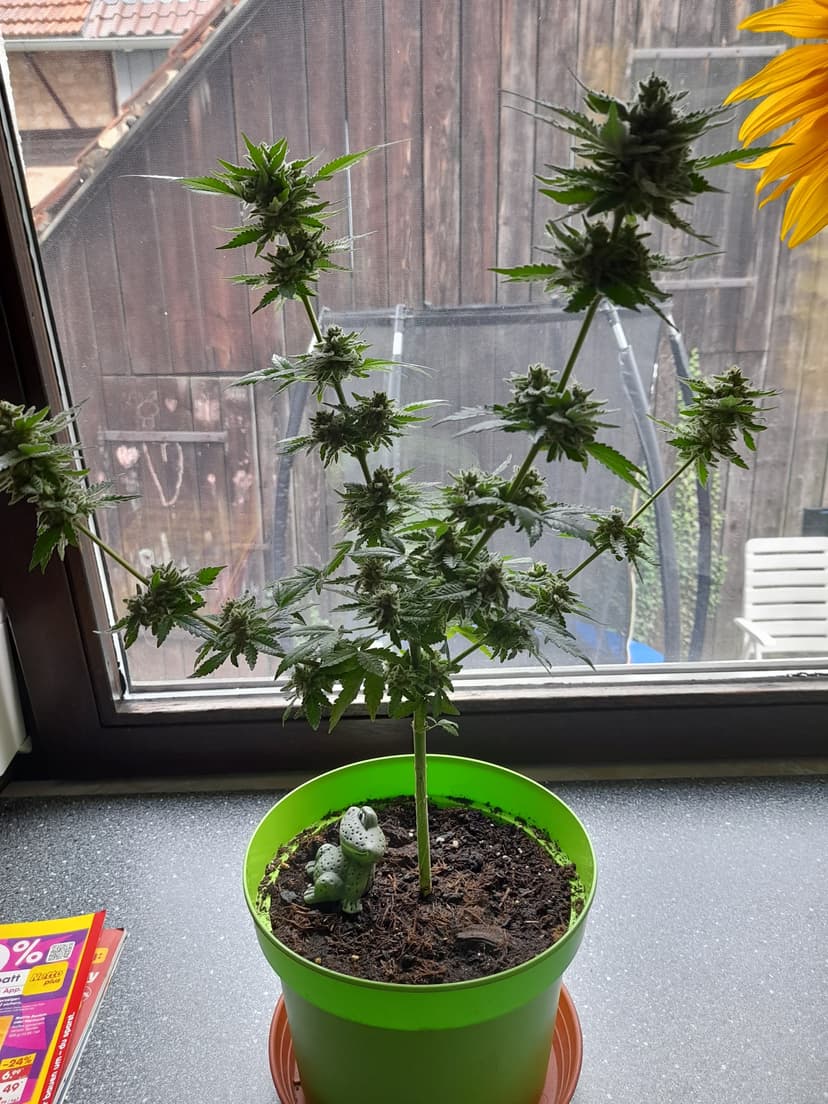
At the base of the stem, there were also purely female flowers, so I immediately checked if there were really seeds and

found them right away. However, these were not yet ripe. Now I will let them stand for about 3 more weeks and then check again randomly before I harvest the seeds.
 #19
#19@herr_gruen THAT’S ABSOLUTELY AMAZING!!!
So that means if I take a female from my oldschool regular Ketama strain and grow it out with the lady, I’ll have feminized Ketama seeds? Or will there still be Y chromosomes present since it’s a regular strain?
#20@Growstarter40 If you take a female plant and treat one of its shoots to self-pollinate it, you will get purely feminized seeds because the Y chromosome is not present in its genetics, meaning they will have two X chromosomes. This works equally well for photoperiod and autoflower plants. You should start the treatment before the flowering phase begins. Mark the shoot you want to treat and make sure the other shoots don’t get any of it. This is how breeders do it. The plant must not be smoked or consumed as it will be toxic due to the treatment. If you do this with two plants, you only treat one of them and use it to pollinate the other, in which case you dispose of the mutated male plant after pollination and can smoke the pollinated female. Keep in mind that seed ripening can take about 4 weeks; I would wait a bit longer just to be safe and possibly take a sample before harvest to check if the seeds are ripe.
#21This is great info, I discussed with many breeders at Mary Jane, but no one wanted to go into detail about how the two females cross with each other  and since I now have a few old-school strains, I’ll try something tasty
#22Hey there @herr_gruen ,
I just checked my notes on the topic again… It says… “the ripeness of the seeds determines the flowering period of the chosen plant.”… For me, that means if you’ve chosen Strain XY, you only need to reach the complete maturity of the flowers… (8-10 flowering weeks). And, ideally, as can also be read in other forums, add another week… Your lady should slowly be ready by herself by now… But that’s all just “hearsay” from the web. There’s hardly any decent, illustrated documentation for it. What you’re doing with your experiences and the pictures you’re sharing with the community on
#23I will also start a second round after my vacation in a few weeks and cross two strains with each other. I’ll use a Fat Bastard and a Bubble Gum Sherb for that. Then, during that run, I will also create a Growlog for it and document everything in a bit more detail.
#24Experiment No. 1 is a Gorilla Sherbet

In the tent today is F69 W10; I had sent the experiment into flower a few days prior. Since it’s the first attempt, there were a few starting difficulties. I first treated one shoot with Gibberellic acid, and when the desired signs weren’t visible, I tested colloidal silver water on the second shoot. Because of this, I was approximately in the third week of flowering when the first male flowers appeared. In hindsight, both methods had worked, with the silver water showing the desired signs faster. Regarding the cost factor, I also prefer the silver water as the diodes last forever; my great-grandchildren can still use them. The only things I need to buy again are the 9-volt block battery and distilled water. But I digress; the plan is to harvest her when her counterpart in the tent has reached the desired maturity, which, according to the breeder, would be around next Sunday, then at least the 11 weeks would be complete.
 #25
#25Use a small switching power supply or a small 9V power supply. I have tons of such parts lying around here, from old phones, routers, etc. I always keep all the plug-in power supplies when I dispose of the devices.
#26Hi @Dbe, I also did some research last night, and regarding the gibberellic acid method, it’s said to be rather outdated because it produces seeds that are not very resistant. Colloidal silver solution 30ppm is available at ama… and the procedure is the same.
The completely natural variant is called Rodelization, where the flowers are sent into overripeness; they want to reproduce, so they first form large nose-like buds to catch pollen, and as a very last resort, hermaphroditism, producing pollen sacs with female pollen from the buds.
The variant with colloidal silver is probably the breeders’ choice as it is reliable and productive…but yes, it all takes its time, one way or another…but remember that you can now cross your favorite strains yourself and develop a new feminized strain 


#27So, the time had come, I finished the experiment today
 Cut off the shoots and laid them on a newspaper to dry
 And since I had to wait so long, I also directly plucked the flowers from the branches and checked what was inside
 It was a sticky but very good smelling affair.
And TADAAA, some immediately stuck to my resinous fingers. Now I will wait until the flowers are dry and then take out the rest of the seeds.
All in all, a successful experiment. And expandable.
Meanwhile, in the tent, I treated a few of the lower popcorn buds from my two other strains with Gorilla Sherbet pollen, using a brush to specifically pollinate only the flowers that would have been too small for smoking anyway and also received too little light. This way I created a strain from a Fat Bastard/Gorilla Sherbet and a strain from a Bubble Gum Sherb/Gorilla Sherbet. Both were successful. The Bubble Gum is already curing and 28 seeds came out of the two mini buds. I briefly checked the Fat Bastard when I hung it on the clothesline and immediately had one on my finger; the rest will come out during trimming.
Next month I finally have vacation and then I’ll start the next round, where the Fat Bastard will be propagated and I’ll cross it with the Bubble Gum Sherb. This will result in my desired strain, the Black Forest Queen. This time with a grow log. And since I will only be treating the Fat Bastard, I can still enjoy the Bubble Gum Sherb when it is harvested.
Have fun recreating it