 #20
#20Vapour-pressure deficit
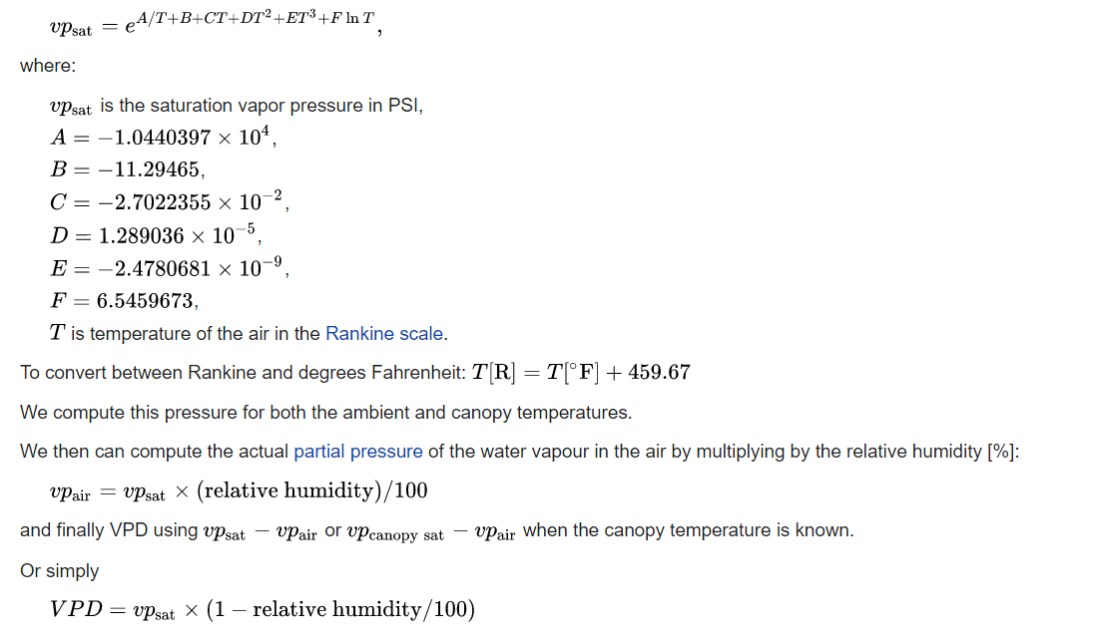
Vapour-pressure deficit, or VPD, is the difference (deficit) between the amount of moisture in the air and how much moisture the air can hold when it is saturated. Once air becomes saturated, water will condense out to form clouds, dew or films of water over leaves. It is this last instance that makes VPD important for greenhouse regulation. If a film of water forms on a plant leaf, it becomes far more susceptible to rot. On the other hand, as the VPD increases, the plant needs to draw more water from its roots. In the case of cuttings, the plant may dry out and die. For this reason the ideal range for VPD in a greenhouse is from 0.45 kPa to 1.25 kPa, ideally sitting at around 0.85 kPa. As a general rule, most plants grow well at VPDs of between 0.8 and 0.95 kPa.[citation needed]
In ecology, it is the difference between the actual water vapour pressure and the saturation water vapour pressure at a particular temperature. Unlike relative humidity, vapour-pressure deficit has a simple nearly straight-line relationship to the rate of evapotranspiration and other measures of evaporation.
Climate
VPD can be a limiting factor in plant growth. Climate change is predicted to increase the importance of VPD in plant growth, and will further limit growth rates across ecosystems




 lovely collection


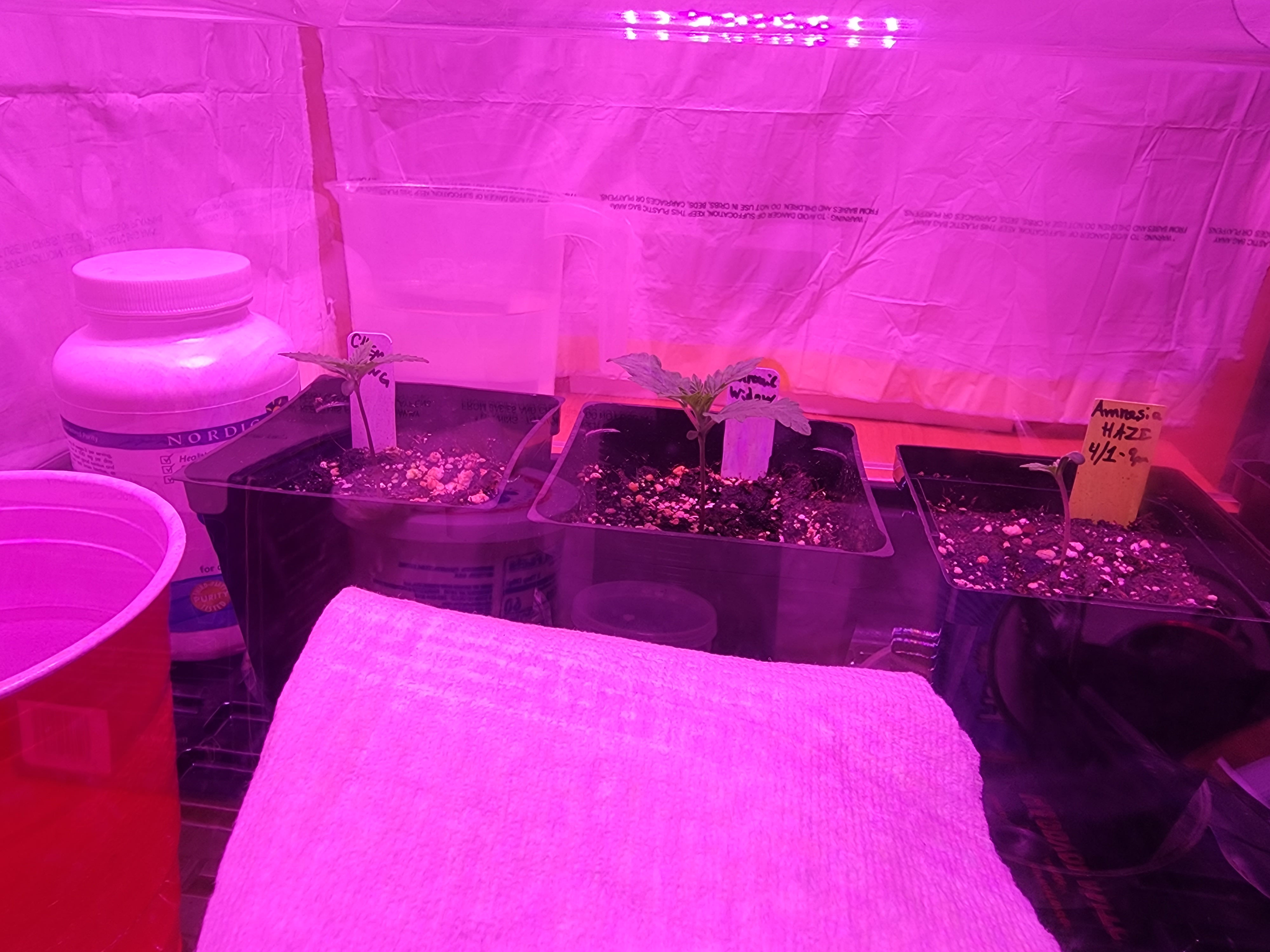
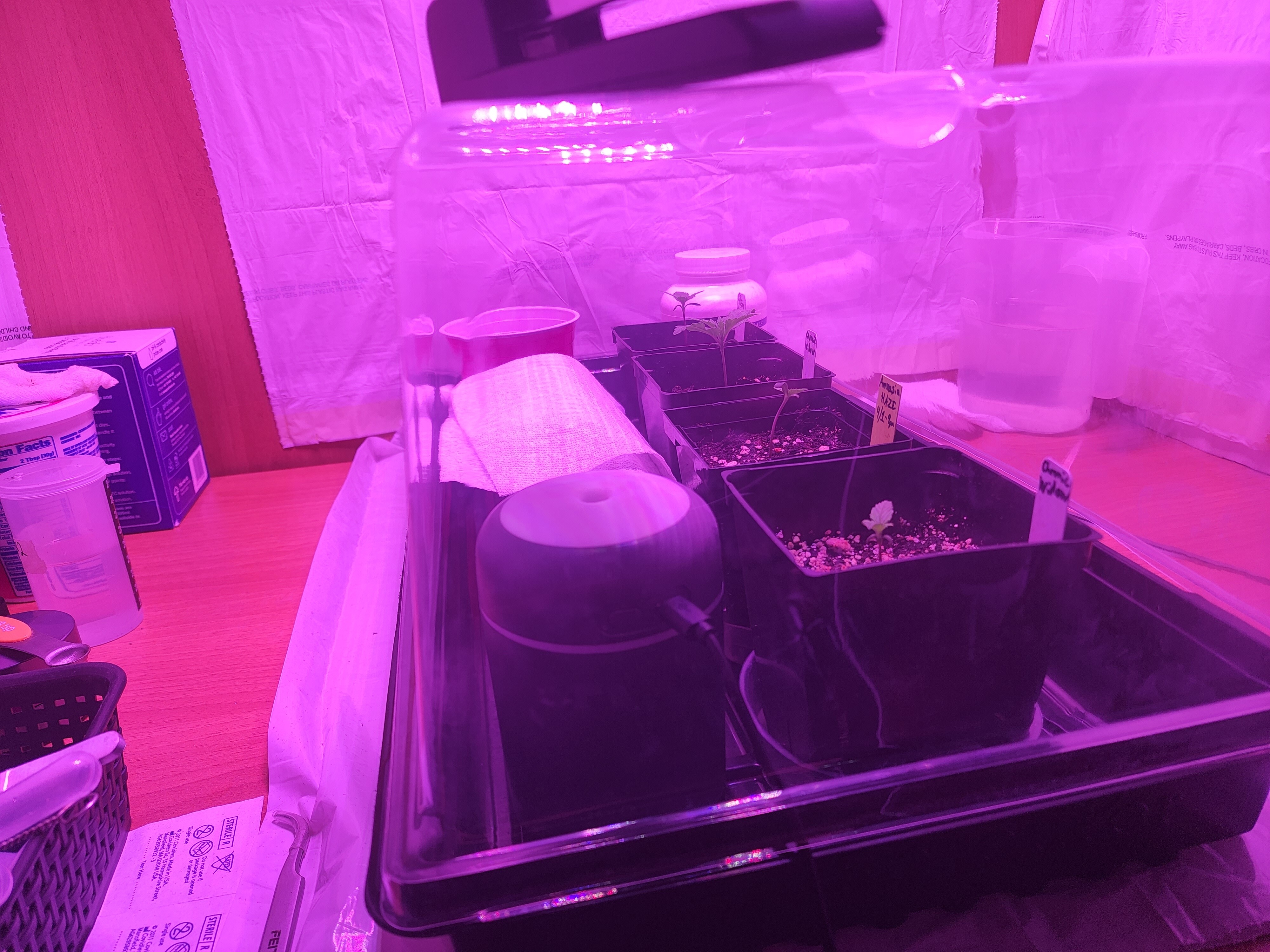
 lol and lightly burned my seedlings. That was a long time ago but lesson learned! That usually happens with intense lights not cheap lights. When I was using Mars hydro, Roleadro Galaxyhydro, Atrium, and some other cheap Chinese crap, they don’t really affect the temperature on my thermometers because they are not that intense and they don’t reach them but once you step your game up and get better light like Platinum LED or BlackDogLED or Kind LED K3 or K5 series is what usually home growers get.